A compact visual-shift puzzle that rewards planned moves
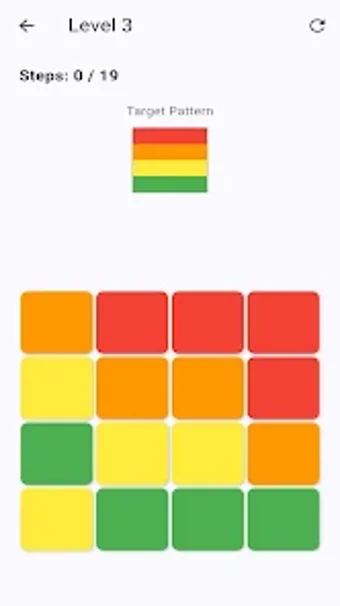
VexaShift by Kael 009 is an Android puzzle that tests spatial reasoning through grid-based color matching. Players manipulate a 4x4 board to reconstruct a visual gradient by sliding rows and columns, forming short, focused challenges around pattern recognition and planning. The app keeps a clean presentation and an ad-free interface and offers quick problem-solving moments. It receives regular updates to maintain performance and suits casual mobile players seeking brief, mentally engaging sessions.
What kind of game is VexaShift?
In this game you pursue aesthetic targets rather than numerical scores: the objective centers on gradient reconstruction and visual pattern matching. Puzzles present a single-board challenge where color placement and relative ordering matter more than isolated tile values. The emphasis on color transitions makes the player think about whole-board states, so success depends on recognizing global patterns rather than local swaps.
Does it rely on simple sliding or deeper move planning?
In practice the mechanics require planning ahead because rows and columns use cyclic shifts, meaning moved tiles wrap to the opposite edge. That wraparound behaviour converts what looks like a single slider into a system where one move affects multiple target positions, and puzzles enforce a limited number of steps. Players who enjoy mapping sequences of moves benefit most from this constraint.
What does the presentation and interface communicate to the player?
The board uses vibrant colored blocks and clear gradient targets to communicate goals at a glance. The interface stays minimal so the visual pattern is the primary cue. The app is lightweight, with an installer around 11 MB, and the experience excludes gambling or prize mechanics. These choices keep attention on color relationships and decisionmaking during short play sessions.
Is the learning curve approachable for new players?
Early puzzles introduce basic movement quickly, yet the title rewards deliberate sequences rather than reflexive swapping. The step limits increase the value of each decision and shift difficulty toward planning, not dexterity. The developer’s background in logic-focused mobile games shapes consistent puzzle design, so players comfortable with sequence thinking adapt faster than those expecting trial-and-error play.
Who should pick this puzzle for regular short sessions?
VexaShift is a measured choice for players who prefer compact, visual logic exercises on mobile devices; its focus fits commuters and brief breaks. However, those seeking social modes or broad mode variety may find the single-board, repeatable puzzle loop narrow. The app rewards careful planning and suits anyone who enjoys concise, pattern-driven challenges as a quick mental workout.